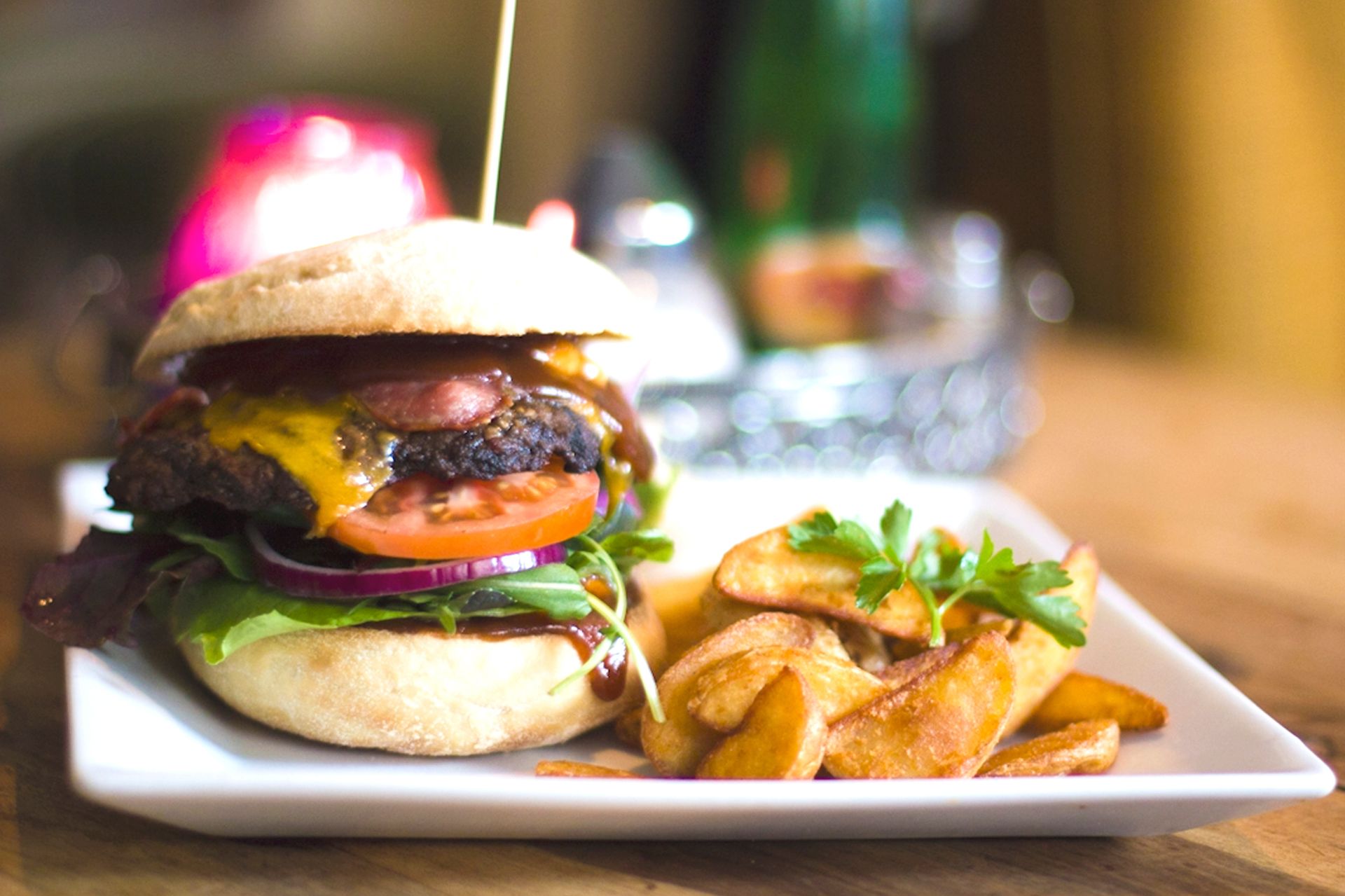
First question: What do you want to change in the photo?
Turn the request “make it look more professional” into a concrete task: does the table need to be tidier, does the light need balancing, or does the whole product need better framing? The readability of the visual can be improved without changing the product's portion size, ingredients or actual presentation.
Adding cheese to a burger that does not actually contain it, duplicating an ingredient on a pizza, or presenting a small dessert slice as a giant portion is not just an aesthetic correction; it creates a false expectation about the product the guest will buy.
Editing decision matrix: which is appropriate, which is risky?
| Request | Authenticity assessment | Recommended method |
|---|---|---|
| Photo is dark | Low risk if the product is unchanged | Light/exposure balance |
| Cluttered framing | Product and venue authenticity must be preserved | Cropping and reducing distracting elements |
| Color is too cold | Should approximate the real product color | Measured color correction |
| Background table looks dirty | Should not create a misleading impression of the venue | Reshoot or limited cleanup |
| Burger looks small | The real portion cannot be changed | Reshoot with a more accurate camera angle |
| Too little cheese/sauce | Changing the reality of the menu is risky | Reshoot the real product |
| Fruit not on the dessert | Creates the impression of a new product | Do not add digitally |
| No customers, venue is empty | Creating fake crowds can mislead | Use a real venue photo |
This matrix is NEFES's publishing accuracy standard; each row is not presented as the specific provision of any single law or as the definitive legal limit of all AI regulations.
Create a source record before editing the photo
At least four pieces of information can be stored: business name, real product name, raw photo, permission/rights holder. If the menu and shooting date vary, add these as well.
The raw photo must be kept separately. If the creative result of AI editing is saved over the original source file, it becomes harder later to answer “what changed?” Nor should a before image be deliberately made to look worse to show fake success.
Deciding between shooting and AI editing
If the problem with a food image is framing, first consider reshooting. Reshooting, can provide a more reliable source, especially for the real portion, the flow of the sauce, or the preparation movement.
For lighting and framing issues in the photo, editing may be sufficient. If no video was shot, do not describe a cooking movement that was never actually recorded as if it were captured on camera when preparing a moving Reel from a single photo.
Where is the line under the 2026 AI advertising rules?
The Ministry of Trade's 27 July 2026 announcement, regarding advertising changes that take effect on 1 August, addresses the disclosure of artificial digital characters that cannot be distinguished from real people and the ban on misleading experience or recommendation advertising using an artificial copy of a real person. This does not mean every color correction will automatically be published with the same label, or that every AI photo is prohibited. For details, see the Ministry of Trade's statement review.
NEFES's corporate visual principle rests on a simpler standard of trust than the law: An artificial or representative scene is not presented as a real customer photo or a real order result. When necessary, representative production is clearly labeled.
Separate AI visuals from real customer work
Showcase or training scenario: Imaginary products and scenes may be produced, but it is clearly indicated that this is not a real customer application.
Social media content delivered to the customer: The product and service offered by the real business are represented accurately. No imaginary campaigns, new menu ingredients, unreal venues or customer statements are invented.
Case study: A “success story” is not published without customer approval, the real raw visual, the process applied, and the measured or unmeasured result.
Seven-point final visual quality gate
- Are the raw photo and the edited version kept separate?
- Are the product name, portion and weight the same as on the real menu?
- Has any new ingredient, customer, person or venue element been invented?
- Do light and color make the product look different from what it actually is?
- Are the source and usage rights of the visual clear?
- If a representative scene is needed, is this made clear?
- Did the customer or brand contact approve the final creative?
NEFES manages post, Story and Reels production in an integrated way, from restaurant photos, with this workflow that protects the authenticity of the product. Making the visual look good and making the product look accurate are not separate goals; they are standards to be protected together.
Adapt this guide to your business
Place the edited visual side by side with the original photo and check the ingredients, portion, color and plate shape. If it looks beautiful at first glance but differs from the real product, do not publish that version.