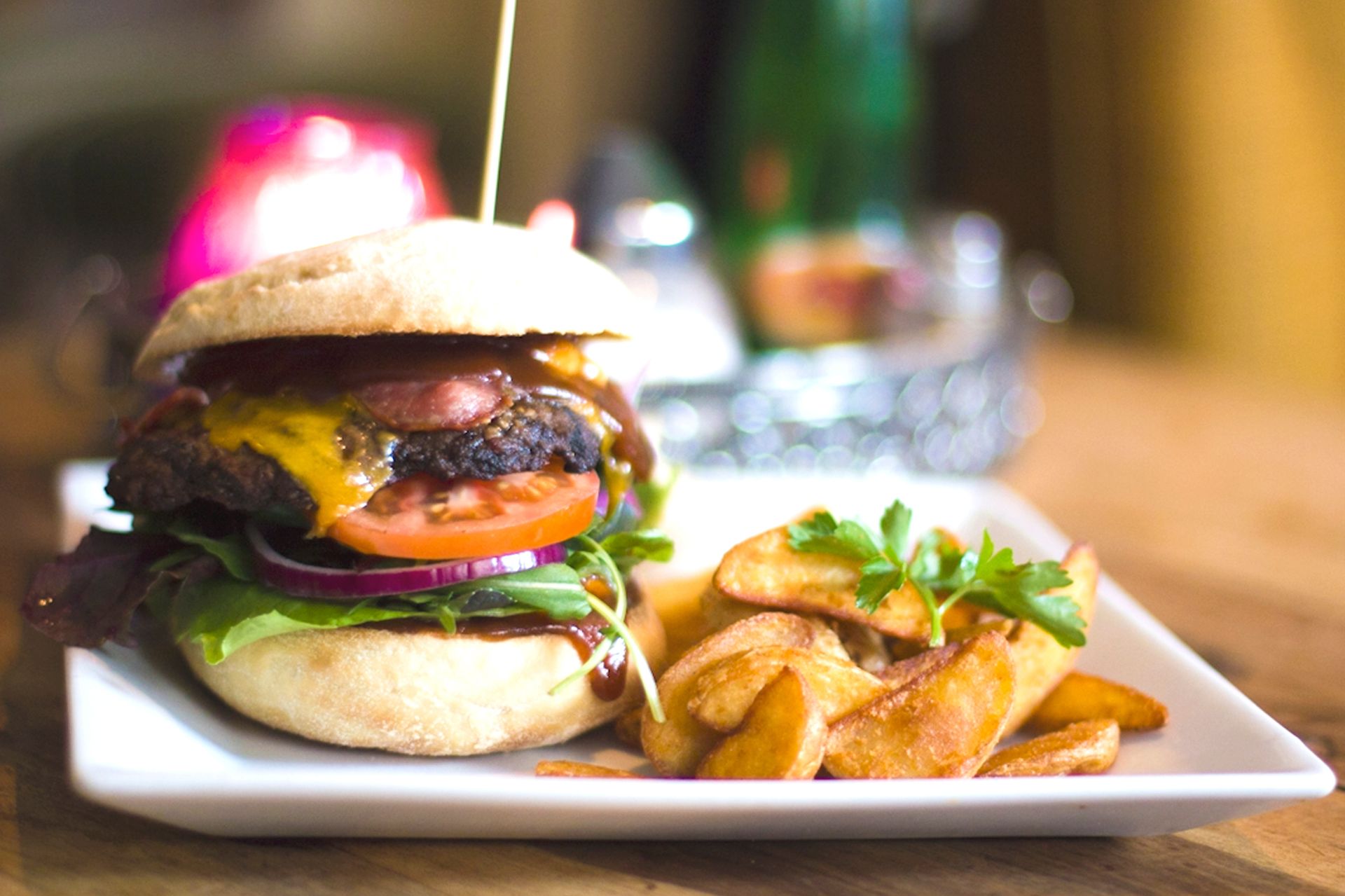
What should you verify before starting the photo shoot?
The product in the photo must actually be served at the restaurant. Its name on the menu, ingredients and portion size should reflect reality. Do not add extra cheese, extra ingredients, a larger plate or a different product for the sake of the photo.
You can photograph the same dish from different angles; however, a different plate or an outdated product should not stand in for the portion the customer actually receives.
10-shot phone shoot list for a restaurant
| Frame | Camera angle | Purpose |
|---|---|---|
| 1. Main product | 45 degrees | Full presentation of the dish |
| 2. Top-down | 90 degrees, if possible | Plate composition |
| 3. Detail | Close-up | Real ingredients and texture |
| 4. Side profile | Eye level | Height and real portion |
| 5. Moment of service | Medium distance | How it arrives at the table |
| 6. Side dish | Real side-by-side presentation | Showing the menu combination |
| 7. Drink pairing | Real service scene | The table experience |
| 8. Venue connection | Product + background | The restaurant's character |
| 9. Takeaway | Real packaging | Appearance on home delivery |
| 10. Short video opening frame | Vertical 9:16 | Source for Reels editing |
If a restaurant does not offer delivery, it can set aside the ninth frame for another real service. Creating product shots that do not exist in order to complete this list is not right.
How can you easily improve the lighting?
Place the food, if possible, near a large window. You can take natural light from behind and to the side to show the plate's strongest texture. If there is harsh direct sun, soften it with a sheer curtain. If the phone camera's auto exposure blows out a shiny plate, reduce the exposure somewhat.
Flash can create harsh reflections on the plate. If the venue is dark, adjusting the existing light or using simple constant lighting may be more consistent.
Three common framing mistakes
Very wide angle: The food may look larger or misshapen than it is. If the edges of the frame are distorted, move the phone back slightly and use a more natural angle.
Cluttered background: If unrelated receipts, cables or a person's personal items are visible behind the product, clean up the shooting area. The background should not lose the venue's real identity.
Excessive editing: A filter that changes the color from the real product, an artificial addition that alters the quantity of the product, and an ingredient that is not there are a more serious trust issue than aesthetics.
Difference between vertical and horizontal use
Instagram feeds can use vertical or other aspect-ratio visuals. Reels generally require a vertical 9:16 source. It is possible to crop a photo into different formats; however, cropping should not remove the product's necessary detail or the plate's authenticity.
For example, if half of the portion is outside the frame, also use a separate full-product frame alongside the attractive close-up.
Weekly content plan from photos
Monday: The real main frame of the signature product.
Wednesday: A second angle showing the product's ingredients or the actual serving detail.
Friday: The product presented together with the restaurant's atmosphere.
Weekend: Short moving Reels or a current Story made from previously shot real photos.
This sample distribution is not a mandatory publishing quota for every restaurant. It should be adapted to the menu, visual source and business goals.
How does NEFES use real photos?
NEFES matches real product and venue photos from the restaurant with brand memory, arranges lighting and framing design, and creates post and Reels scripts. Making a real image look better and changing the product's identity are different things.
When the file retains the product name, photo source, shoot date and usage permission after the shoot, the same product can be used consistently across different formats.
Final check
- Do the photos show the real and current product?
- Are the menu name, ingredients and portion consistent?
- Did the framing or lighting change the real color too much?
- Is there a person in the visual who requires permission?
- Is it clear which restaurant and which product the photo belongs to?
- Do the vertical Reels and post cropping hide an important detail?
Adapt this guide to your business
Shoot a plate from different angles from a fixed point near a window. Compare the photos on a small screen; do not change the real portion or ingredients for the sake of an appetizing look.